The Words We Didn't Know We Needed: How Japanese Is Filling Gen Z's Emotional Vocabulary Gap

There's a specific kind of afternoon that hits differently in late September. The light goes golden and slanted, a song you haven't heard in years shows up on shuffle, and suddenly you're flooded with a feeling that's equal parts warmth and ache — a longing for something you can't quite name, for a time that may not have even been as good as it feels right now.
In English, you might just say you're "feeling nostalgic." But in Japanese, there's natsukashii — a word that holds all of that complexity in four syllables. And Gen Z, the generation that grew up having to coin terms like "main character energy" and "situationship" just to describe their own lives, has noticed.
Across TikTok, Tumblr, and Instagram, untranslatable Japanese words are quietly becoming part of how young Americans talk about their inner worlds. And it's way more than an aesthetic trend.
When English Leaves You Hanging
Language shapes how we experience reality. That's not a new idea — linguists have been arguing about the Sapir-Whorf hypothesis for decades. But for a generation raised on hyper-fast digital communication, where nuance gets flattened into reaction emojis and five-word captions, the hunger for precise emotional language is real.
English is famously blunt about feelings. You're happy, sad, anxious, excited. Maybe "bittersweet" if you're feeling poetic. But the interior life of a human being — especially a young one navigating everything from climate anxiety to parasocial relationships to the weird grief of a pandemic childhood — doesn't fit neatly into those boxes.
Japanese, with its cultural emphasis on subtlety, impermanence, and the relationship between humans and the natural world, turns out to have a lot of words for the gaps.
The Vocabulary That's Going Viral
Let's talk about the actual words, because they deserve the spotlight.
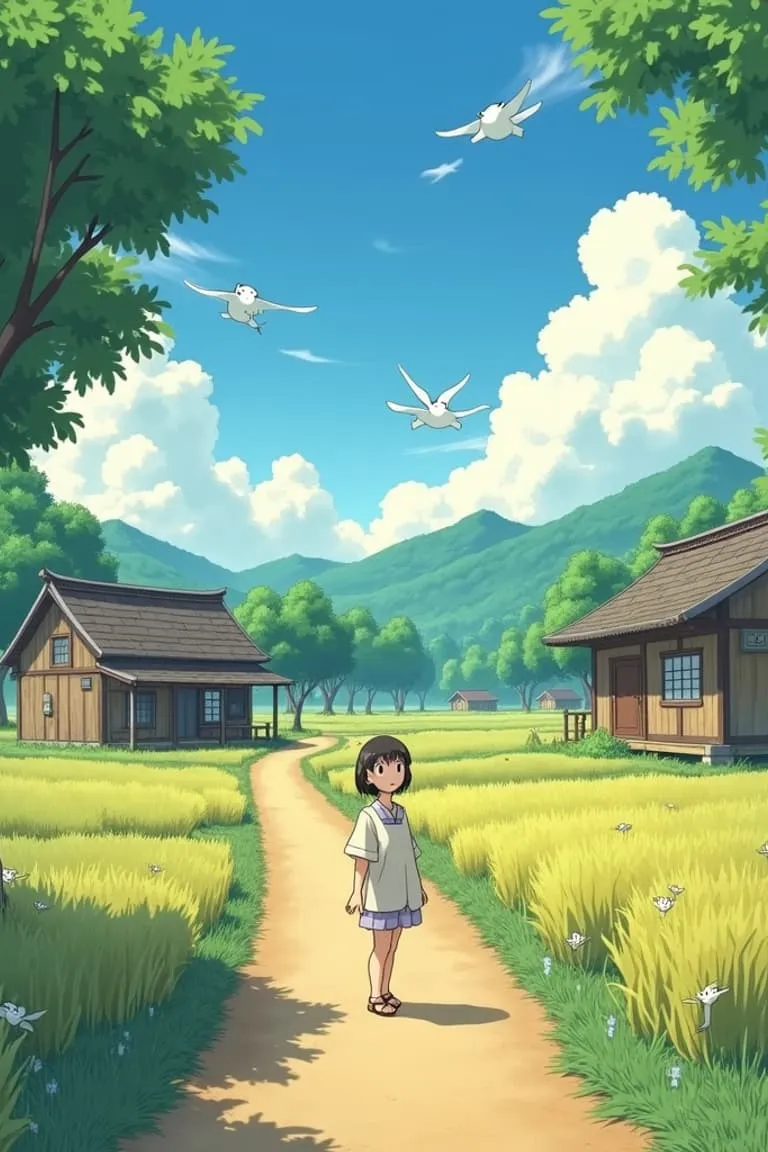
Komorebi (木漏れ日) is probably the most visually intuitive of the bunch. It refers to the interplay of light and shadow created when sunlight filters through leaves — that dappled, shifting glow you see under a tree on a bright day. There's no single English word for it. "Dappled light" comes close but lacks the magic. Once you know komorebi, you start noticing it everywhere, and you suddenly have a word to match the feeling it gives you.
Tsundoku (積ん読) is a gift to every bookish person who has ever stacked novels on a nightstand with the full intention of reading them someday. It describes the habit of buying books and letting them pile up unread. It's not quite procrastination and not quite hoarding — it's its own specific, slightly guilty, deeply relatable thing. The word has been circulating in bookish corners of the internet for years, but it's found a new home in Gen Z's #booktok world.
Mono no aware (物の哀れ) is perhaps the most philosophically rich of the bunch. Roughly translated as "the pathos of things," it's an awareness of impermanence tinged with both sadness and appreciation. It's why watching cherry blossoms fall is beautiful and heartbreaking at the same time. It's the feeling at the end of a really good vacation, or the last episode of a show you loved. Gen Z, a generation often accused of being nihilistic, is actually deeply drawn to this concept — because it's not nihilism at all. It's meaning-making through transience.
Wabi-sabi (侘寂), though it's been floating around Western design culture for a while, has taken on new personal meaning for younger audiences. Beyond aesthetics, it's a worldview: finding beauty in imperfection, incompleteness, and the natural passage of time. In an era of heavily filtered selfies and impossible standards, calling something wabi-sabi is almost an act of resistance.
Koi no yokan (恋の予感) might be the most romantic: the sense upon meeting someone that falling in love with them is inevitable. Not love at first sight exactly — more like a premonition of love. It's showing up in creative writing communities and poetry circles online, and honestly, it deserves a whole playlist.
Why These Words, Why Now
So what's driving the adoption? A few things are converging.
First, anime and Japanese media have never been more mainstream in the US. When you grow up watching Your Name, Spirited Away, or A Silent Voice — stories steeped in mono no aware and natsukashii — you absorb a cultural sensibility even if you don't have the vocabulary for it yet. Discovering the actual words later feels like finding the label for something you already knew.
Second, there's a broader Gen Z movement toward emotional intelligence and specificity. This is the generation that normalized therapy talk, that created entire subcultures around processing feelings through art and media. Having the right word for an emotion isn't pedantic to them — it's empowering. It's the difference between "I feel weird" and having language that actually holds the shape of your experience.
Third — and this is where it gets culturally interesting — there's something about Japanese aesthetics and philosophy that resonates with the way Gen Z already sees the world. The appreciation for slowness, for nature, for impermanence, for finding meaning in small things: it maps onto a generation that is quietly pushing back against hustle culture and overconsumption.
More Than Borrowing, Less Than Appropriation
It's worth pausing here, because any conversation about cultural exchange needs to hold complexity. Borrowing words from another language can be a form of appreciation, but it can also flatten or exoticize the culture they come from.
The healthiest version of this trend — and the one you genuinely see in thoughtful corners of the internet — involves curiosity that goes deeper than the word itself. People who fall in love with mono no aware often end up reading about Japanese aesthetics, watching more Japanese film, learning about the historical and literary contexts that gave rise to these concepts. The word becomes a door, not a decoration.
When komorebi becomes just a pretty caption for a forest photo, something is lost. When it becomes a reason to wonder why Japanese culture developed a word for that specific quality of light, something is gained.
Language as a Form of Care
At the end of the day, what's happening here is kind of beautiful. A generation that communicates largely through memes and shorthand is also, quietly and earnestly, going looking for more precise ways to articulate what it feels like to be alive.
Japanese gives them natsukashii for the ache of the past, komorebi for the beauty of the present, and mono no aware for the grace of letting things go. That's not a bad toolkit.
Maybe the untranslatable is exactly what translation is for — not to replace the original, but to create a bridge. A little wa in the vocabulary, as we'd say around here. And once you find the word for a feeling you've always had, it's pretty hard to go back to not having it.