The Art of Watching Nothing: How Japanese Slow TV Became Gen Z's Favorite Form of Rest
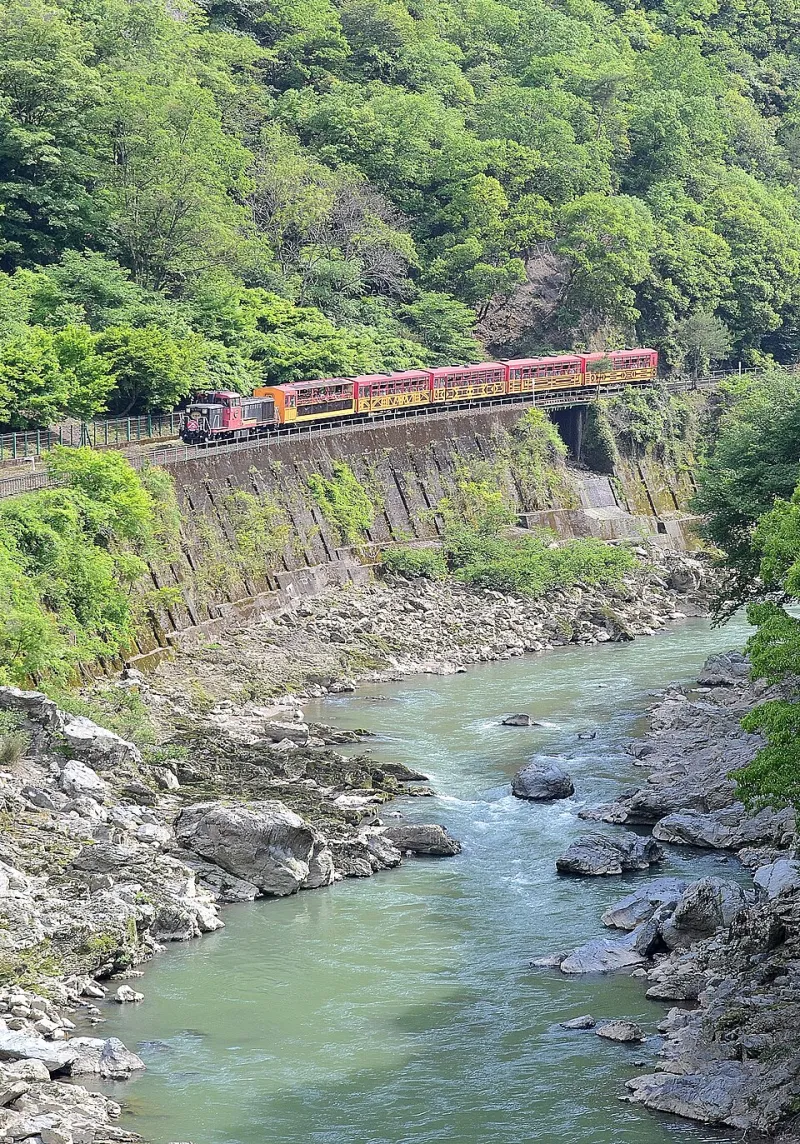
Photo: Toshinori baba, CC BY-SA 4.0, via Wikimedia Commons
There's a seven-hour video on YouTube of a Japanese train traveling from Osaka to Hokkaido. No commentary. No dramatic score. No influencer in the corner of the screen reacting to every passing station. Just the rhythmic clatter of rails, the blur of cedar forests, and the occasional muffled PA announcement. It has millions of views.
If that sounds like the opposite of everything the internet is supposed to be, you're not wrong. And that's exactly the point.
The Format That Refuses to Be Rushed
Slow TV — long-form, unedited programming that follows a single mundane activity in real time — has roots in Scandinavian public broadcasting, but Japan has quietly developed its own deeply meditative version of the genre. NHK, Japan's public broadcaster, has aired programs tracking fishing boats returning to port, craftspeople hand-pulling soba noodles, and cherry blossoms opening over the course of a full afternoon. No plot. No conflict. No resolution arc. Just process.
American audiences, particularly younger ones, have started importing this sensibility wholesale. Reddit threads dedicated to Japanese slow TV content have ballooned in the last two years. Discord servers swap links to obscure NHK archive footage. TikTok creators post clips of Japanese pottery wheels spinning in silence and rack up hundreds of thousands of saves — not shares, saves, the platform's most private form of appreciation.
"I keep a playlist of Japanese train rides specifically for when I need to fall asleep or just stop," says Maya, a 23-year-old graphic designer in Portland. "There's something about knowing that literally nothing is going to happen that makes my brain finally let go."
Why the Algorithm Can't Compete
Here's the thing about most content you consume online: it is engineered, at a molecular level, to keep you watching. Every edit, every notification ping, every autoplay transition is calibrated to prevent the one thing your nervous system desperately needs — a genuine pause.
Japanese slow TV operates on an entirely different philosophy. It doesn't try to hold your attention. It almost dares you to look away. And paradoxically, that's what makes it so compelling.
Dr. Sandra Yee, a licensed therapist based in Los Angeles who works primarily with Gen Z clients, says this kind of content aligns with what she calls "effortless attention" — a state borrowed from mindfulness research where the mind rests not by being emptied, but by being gently occupied with something non-demanding.
"My clients who struggle with anxiety often can't do traditional meditation," she explains. "Their brains fight the silence. But watching someone slowly prepare dashi broth for forty minutes? That's a back door into the same neurological state. The content does the focusing for you."
The Japanese Concept Hiding in Plain Sight
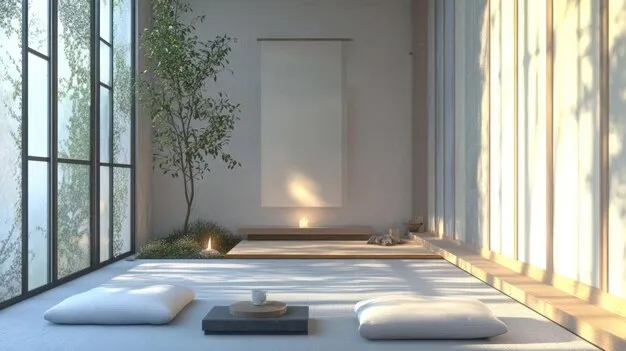
There's a word worth knowing here: ma (間). In Japanese aesthetics, ma refers to the meaningful pause — the space between notes in music, the gap between words in conversation, the emptiness in a room that gives the furniture meaning. It's not absence. It's presence of a different kind.
Slow TV, whether its creators consciously intend it or not, is essentially ma in broadcast form. The long stretch of nothing-happening isn't dead air. It's breathing room. It's the space where your own thoughts can finally catch up to you without the internet screaming over them.
This resonates with a generation that grew up with infinite scroll and has started to recognize the cost. Gen Z, more than any cohort before it, has been vocal about digital fatigue — the particular exhaustion that comes not from doing too much, but from consuming too much, too fast, with no texture or weight to any of it.
"Everything online is designed to feel urgent," says Jordan, a 21-year-old student in Chicago who discovered Japanese fishing documentaries through a friend's recommendation. "Watching a guy on a wooden boat wait for a fish for two hours is like... the opposite of urgent. It recalibrates something."
The Creators Leaning Into Stillness
A small but growing community of American content creators has started producing their own slow TV-adjacent work, often explicitly citing Japanese aesthetics as inspiration. Channels dedicated to ambient cooking footage, unedited walks through quiet neighborhoods, and real-time plant-watering sessions have found surprisingly devoted audiences.
One creator, who runs a YouTube channel featuring long, uncut videos of Japanese-style tea preparation and goes by the handle Stillwater Sessions, told Hey Hoku that the response surprised even her.
"I expected maybe a few hundred people who were into tea," she says. "Instead I get comments from people saying they put it on while they're having a panic attack, or that it's the only thing that helps them sleep. That wasn't what I set out to make. But I think there was just this huge gap in what was available."
The comment sections on slow TV content have their own distinct culture — warm, unhurried, almost conspiratorially gentle. People describe what they were doing while watching. They thank each other for sharing. Nobody's arguing.
Nothing Happens, and That's the Revolution
It would be easy to frame slow TV as a niche quirk, a Gen Z aesthetic phase that'll be replaced by whatever comes next. But the numbers and the testimonials suggest something more durable is happening.
In a media landscape built entirely around maximizing stimulation, choosing content where nothing happens is a genuinely countercultural act. It's a refusal, however quiet, of the attention economy's core premise — that your eyes and your nervous system are resources to be harvested.
Japan, a culture that has long understood the value of restraint, of process over product, of the beauty found in repetition and impermanence, turns out to have been sitting on the perfect antidote all along.
You don't have to understand Japanese to feel it. You just have to be willing to watch a train go nowhere for a while.
And honestly? That sounds like exactly enough.