Here Today, Gone Tomorrow: Why Gen Z Is Actually Okay With That
There's a particular kind of dread that comes with living online. Not the big existential stuff — just the low hum of knowing that everything you post, like, or engage with is being catalogued somewhere. That the internet never really forgets. That your 2019 tweet about a cancelled celebrity is still technically out there, waiting.
So maybe it makes sense that a concept from classical Japanese aesthetics — one that's been around for roughly a thousand years — is quietly becoming Gen Z's favorite mental health hack.
It's called mono no aware. And no, it doesn't translate cleanly. That's kind of the point.
A Feeling Without a Direct Translation
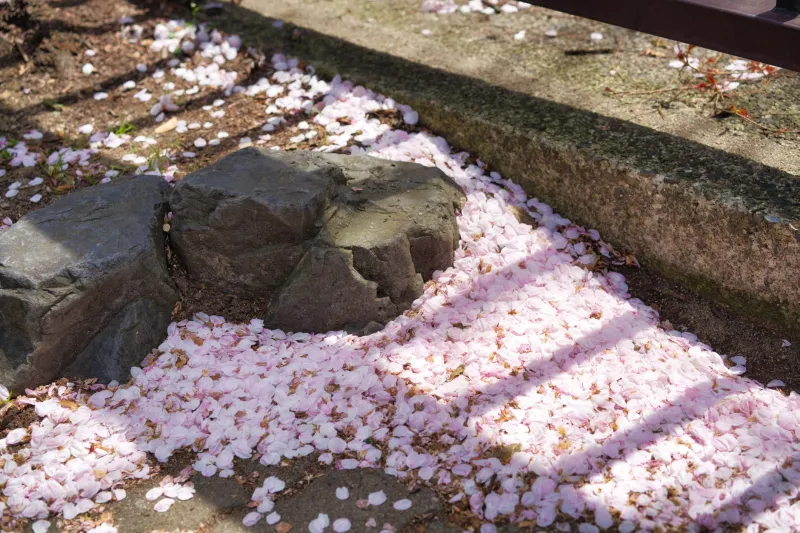
Loosely rendered as "the pathos of things" or "the bittersweet awareness of impermanence," mono no aware is the emotional recognition that beautiful things don't last — and that their fleeting nature is precisely what makes them beautiful. It's why cherry blossom season (hanami) hits different in Japan. The blossoms are only around for about two weeks. That's not a bug. That's the whole deal.
The concept has roots in Heian-era Japanese literature, most famously The Tale of Genji, where the emotional texture of life is constantly tied to transience. A falling petal. A fading song. A season that turns before you're ready.
For generations raised on permanent digital records, this framing feels almost radical.
"I think we grew up being told everything matters forever," says Maya, a 22-year-old design student in Portland. "Every photo, every post, every opinion you had at 16. And at some point that just becomes exhausting. The idea that something can be good because it ends? That's genuinely new information for me."
The Limited Edition as Emotional Event
You can trace this shift in some surprisingly commercial places. Starbucks' seasonal menu drops — the Pumpkin Spice Latte, the holiday cups, the springtime Lavender Haze situation — generate a level of cultural energy that year-round items simply don't. McDonald's Japan has built an entire brand identity around rotating seasonal items that create genuine anticipation. Trader Joe's seasonal section has its own devoted fanbase that treats each fall's arrival of Speculoos Butter like a minor religious event.
This isn't just marketing savvy. It's mono no aware wearing a cardboard sleeve.
When something is only available for a limited time, it stops being background noise and becomes an experience worth showing up for. You don't scroll past a seasonal item the way you scroll past something permanent. You either engage with it now or you don't — and that urgency, that soft pressure of impermanence, is exactly what makes it feel meaningful rather than performative.
Japanese convenience stores (konbini) have been doing this forever. Seasonal onigiri flavors, limited-run collab packaging, sakura-flavored everything in March — the calendar is basically a content strategy. And American consumers, especially younger ones, have started to internalize that logic in ways that go beyond snack culture.
Trend Cycles as Seasonal Thinking
Spend any time on TikTok or Tumblr and you'll notice something interesting: Gen Z has started talking about trend cycles with a kind of seasonal vocabulary. "That was very 2021 autumn." "This is giving early spring 2023." "We're in a very specific mid-winter era right now."
This isn't just aesthetic categorization. It's a framework for making peace with the fact that things change — and that you're allowed to change with them. The Cottagecore phase? Beautiful while it lasted. The clean-girl aesthetic? It had its season. The point isn't to hold on. The point is to appreciate it while it's here.
That's a very mono no aware way to think about internet culture. And it's a significant departure from the older millennial anxiety about keeping up, staying relevant, never being caught on the wrong side of a trend. Gen Z seems increasingly comfortable saying: "I was really into that for a while, and now I'm not, and that's fine."
Anime, Seasons, and the Art of the Goodbye
It's worth noting that a lot of Gen Z's emotional vocabulary around impermanence has been shaped by anime — specifically the way Japanese storytelling handles endings.
Anime seasons are finite by design. A 12-episode run ends. Characters graduate, move away, or simply stop appearing. Even long-running shonen series have arcs that close with genuine finality. Compare that to American prestige TV, which tends to drag beloved shows past their natural endpoint because the audience demand is there and the IP is valuable.
Japanese narrative culture seems more comfortable with the idea that things should end when they're done. And for viewers who've grown up watching that structure, it's shaped a different relationship with closure — one that's less about loss and more about completion.
"When a show I love ends, I used to feel wrecked," says Jordan, a 24-year-old in Chicago who's been watching anime since middle school. "Now I kind of feel grateful? Like, that was its whole life, and I got to watch it. There's something really peaceful about that."
Permanence Anxiety Is Real — And Exhausting
Psychologists have started talking about something called "digital permanence anxiety" — the low-grade stress that comes from knowing your online history is essentially forever. Old posts. Cringe comments. The way you used to present yourself before you figured out who you actually were.
For a generation that grew up being told to curate their digital footprint for future employers, the weight of permanence is genuinely heavy. Everything feels like it counts. Everything feels like evidence.
Mono no aware offers a different operating system. One where the value of an experience isn't tied to how long it lasts or how well it's documented. Where a meal can be meaningful even if you don't photograph it. Where a friendship that naturally fades isn't a failure, just a season that turned.
This isn't nihilism — it's almost the opposite. It's a framework that insists things matter more when they're temporary, not less.
Finding the Wa in Letting Go
There's a quieter version of this showing up in how young Americans are approaching their own lives. Journaling that doesn't get published. Playlists made for a specific season and then retired. Group chats that go silent and stay that way without any dramatic fallout. The growing popularity of analog photography — where you only get 24 or 36 shots — speaks to the same impulse. Constraints create meaning.
The Japanese concept of ichigo ichie — "one time, one meeting," the idea that each encounter is unique and unrepeatable — is showing up in how Gen Z talks about live events, spontaneous hangouts, and even conversations. "That was an ichigo ichie kind of night" has entered the casual vocabulary of people who've never set foot in Japan but absorbed the concept through years of cultural osmosis.
Maybe that's the real story here. Not that Gen Z discovered Japanese philosophy and had a moment of enlightenment — but that the ideas were always available, and the current moment made them necessary.
When everything online screams for permanence, sometimes the most radical thing you can do is let something be beautiful, let it end, and resist the urge to screenshot it.
The cherry blossoms don't need to be archived. They just need to bloom.