Dread Without Jumpscares: How Yokai and Japanese Folklore Are Redefining Horror for a New Generation
There's a particular kind of dread that doesn't announce itself with a blaring violin sting. It creeps. It lingers. It makes you question whether what you just saw in your peripheral vision was actually there. That's the flavor of fear that Japanese folklore has been serving for centuries — and Gen Z, exhausted by the predictable mechanics of Western horror, is absolutely here for it.
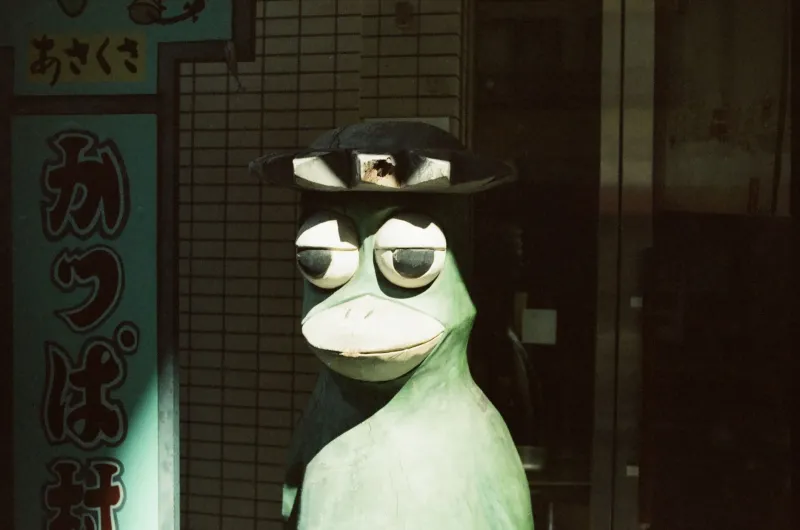
Scroll through horror-adjacent corners of TikTok and YouTube, and you'll find a growing wave of young Americans deep in the lore. Not Freddy Krueger. Not another haunted house with a twist ending. We're talking kuchisake-onna, the slit-mouthed woman who asks if you think she's pretty. We're talking kappa lurking beneath river surfaces, and the faceless noppera-bō whose blank visage somehow hits harder than any prosthetic mask ever could. Japanese supernatural horror — rooted in mythology, ritual, and a philosophy of the uncanny — is having a genuine cultural moment.
And it's not just passive consumption. It's sparking real conversation.
From Gore to Ghosts: A Shift in What Scares Us
Western horror has spent decades escalating. More blood. Louder jumps. Increasingly elaborate deaths. And somewhere along the way, a generation raised on true crime podcasts and global anxiety decided that the shock-and-gross-out formula had kind of... stopped working.
"I grew up watching slasher films at sleepovers and they were fun, but they never actually scared me," says Priya, a 22-year-old horror content creator based in Portland. "The first time I watched Kwaidan for a film class, I couldn't sleep. And nothing even happened the way I expected it to. That's when I realized the difference."
That difference is philosophical as much as it is cinematic. Japanese horror — whether you're talking about folklore traditions, J-horror films like Ringu or Ju-On, or the deeper mythological roots they draw from — operates on a logic of ambiguity and imbalance. The fear doesn't come from knowing what the monster can do to your body. It comes from not fully understanding the rules. From the sense that the world contains forces that don't care about your survival at all, and never really did.
In an era where young people are already grappling with systems that feel arbitrary and indifferent — climate anxiety, economic precarity, a media landscape that rewards chaos — that kind of existential horror lands differently. It doesn't feel like escapism. It feels almost like recognition.
The Yokai Aren't Just Monsters — They're Metaphors
One thing that draws Gen Z specifically to Japanese supernatural folklore is the layered storytelling embedded in the creatures themselves. Yokai aren't random. They're cultural artifacts.
The tanuki who shapeshifts to deceive reflects anxieties about identity and trust. The yuki-onna, the snow woman who appears to travelers in blizzards, carries centuries of gender dynamics and the fear of the unknowable feminine. Even something as seemingly absurd as the kappa — a water creature that steals your life force through your butt, because yes, that's a real thing — has roots in cautionary tales about rivers, children, and the dangers of hubris near water.
"What I love is that every yokai is basically a cultural conversation that got encoded into a monster," says Marcus, a folklore studies grad student in Chicago who runs a newsletter dedicated to supernatural traditions across Asia. "Western horror tends to separate the creature from its context. In Japanese folklore, the creature is the context. You can't understand the fear without understanding the history."
That intellectual dimension is a big part of the appeal. Gen Z has grown up in an information-rich environment where surface-level entertainment often feels hollow. A horror story that also teaches you something — about Edo-period Japan, about Buddhist concepts of the afterlife, about how rural communities made sense of unexplained deaths — offers a different kind of engagement. It's horror you can think about the next morning without feeling like you wasted your time.
The Role of Anime, Manga, and Gaming
It would be naive to talk about this trend without acknowledging the pop culture pipeline that made it possible. Series like GeGeGe no Kitaro, Mononoke (the 2007 anime, not the Miyazaki film), Toilet-Bound Hanako-kun, and Dororo have spent years introducing Western audiences to yokai through narratives that are visually stunning and emotionally complex. Games like Nioh and Yo-kai Watch gamified the mythology in ways that made it approachable without flattening it entirely.
And then there's the Junji Ito effect. The manga artist's work — spirals that drive people mad, towns that fold in on themselves, ordinary people undone by forces they can't name — has become a genuine cultural touchstone for young horror fans. Ito's horror is bodily and cosmic simultaneously, deeply indebted to Japanese folklore's tradition of the uncanny even when it's technically science fiction. His work has a dedicated following in the US that crosses gender, age, and genre lines in ways that traditional horror rarely achieves.
"Junji Ito changed what I thought horror could do," says Dani, a 19-year-old art student in Austin who has been creating yokai-inspired illustrations for the past two years. "It's not about being scared. It's about being disturbed in a way that makes you think. I wanted to make art that did that."
What Western Horror Could Learn
None of this is to say Western horror is dead — Hereditary, The VVitch, and Talk to Me have all demonstrated that American audiences are hungry for psychologically sophisticated scares. But there's a meaningful pattern in what Gen Z gravitates toward when they go looking for horror on their own terms.
They want dread over shock. They want mythology over mechanics. They want stories where the monster represents something beyond itself.
Japanese folklore offers all three in abundance, wrapped in an aesthetic that feels genuinely different from anything the Hollywood machine produces by default. The visual language — woodblock print sensibilities, the geometry of traditional architecture, the specific quality of light in a paper lantern's glow — carries its own atmospheric charge.
For a generation that grew up on algorithmically curated content, there's something almost radical about encountering a horror tradition that operates on entirely different assumptions about what fear is for.
Finding the Wa in the Weird
Maybe that's the real story here. Yokai and Japanese supernatural folklore aren't just a horror subgenre trending upward. They're a reminder that storytelling cultures develop their relationship with fear based on what they value, what they've survived, and what they need to make sense of.
And right now, a lot of young Americans are finding that the Japanese approach — patient, layered, rooted in something older than cinema — speaks to something they couldn't quite name before.
The slit-mouthed woman is still asking if you think she's pretty. The answer, apparently, is yes.