Ink Over Algorithms: Why Gen Z Is Falling Hard for the Japanese Art of Letter-Writing
There's something almost radical about waiting. In a culture that measures connection in milliseconds — the little ellipsis bubbles, the instant reaction emoji, the notification that arrives before you've even finished a thought — the idea of sitting down, choosing the right paper, and writing something by hand feels almost rebellious. And for a growing number of young Americans, that rebellion has a name: tegami.
In Japanese, tegami (手紙) simply means "letter." But the culture around it runs much deeper than the word suggests. It carries connotations of care, deliberateness, and emotional honesty — the sense that someone sat with their thoughts long enough to commit them to paper. And right now, that feeling is resonating with a generation that grew up fluent in digital shorthand but is quietly starving for something more substantial.
What Tegami Actually Means
Japan has a long, richly layered history with the written letter. From the poetic correspondence of the Heian period — where court nobles exchanged verses on seasonal paper — to the modern konbini stationery aisles stocked with washi-textured notecards and character-themed letter sets, writing by hand has never really gone out of style there. Tegami culture emphasizes not just the content of a letter but the entire sensory experience: the weight of the paper, the ink color, the way you fold it, even the scent of the envelope.
It's a holistic act of communication — and that's exactly what's catching on.
For many Gen Z Americans discovering this practice through Japanese stationery hauls on TikTok or aesthetic Tumblr rabbit holes, tegami represents something they didn't have a word for before: communication that costs something. Not money, necessarily, but time. Attention. Vulnerability.
The Stationery Haul Pipeline
Ask anyone who's recently fallen into the tegami rabbit hole and they'll probably tell you it started with a haul video. Japanese stationery brands like Midori, Stalogy, and Yamamoto Paper have developed devoted followings among young American creatives, and specialty shops like Kinokuniya in cities like New York, Los Angeles, and Seattle have become pilgrimage spots for the aesthetically inclined.
But it doesn't stop at pretty paper. Hobonichi planners, washi tape collections, rubber stamp sets, and fountain pen starter kits are showing up in dorm rooms and apartments across the country. What starts as an aesthetic interest — and yes, the look of Japanese stationery is genuinely stunning — often evolves into something more intentional.
"I bought a letter set because it was cute," says Maya, a 22-year-old graphic design student in Chicago. "Then I actually wrote a letter to my best friend who moved to Portland, and she cried. And then I cried. It became this whole thing."
That "whole thing" is exactly the point.
When a Message Actually Lands
There's neuroscience behind why handwritten letters hit differently. Reading someone's actual handwriting activates parts of the brain associated with emotional processing in ways that a sans-serif font simply doesn't. You can see where someone pressed harder on the page. You can spot a word they crossed out and rewrote. The imperfections are the message.
But beyond the biology, there's something culturally significant happening here. Gen Z has grown up watching intimacy get flattened — first into texts, then into reacts, then into voice notes that auto-delete. The emotional bandwidth of a DM, however heartfelt, exists in the same space as spam and group chats and brand newsletters. A letter arrives differently. It has weight. It has an address on it. Someone touched it.
"Getting a letter in the mail feels like someone handed you something they made," says Jordan, a 24-year-old in Austin who runs a small pen pal matching community on Discord. "Even if it's just a few sentences, it doesn't feel casual. It feels like they meant it."
Jordan's community now has over 400 members, most of them between 18 and 27, and it's grown almost entirely through word of mouth.
Slowness as a Wellness Practice
It's not a coincidence that the tegami trend is emerging alongside broader Gen Z interest in intentional living — the same cultural current that's driving interest in ikebana, analog journaling, and slow-travel aesthetics. There's a growing awareness among younger Americans that constant digital availability isn't the same as genuine connection, and that the frictionlessness of modern communication might actually be making intimacy harder, not easier.
Writing a letter demands that you sit with your feelings long enough to articulate them. You can't unsend it. You can't edit it into oblivion. You have to actually decide what you want to say — and then commit.
For a generation that has been told their attention spans are broken and their relationships are shallow, that kind of commitment feels meaningful. Even healing.
Some therapists and wellness practitioners are starting to take note. Journaling has long been recommended for emotional processing, but letter-writing adds another layer: it's inherently relational. You're not just processing for yourself — you're reaching toward someone else.
The Pen Pal Renaissance
One of the more delightful side effects of this movement is a genuine pen pal revival. Platforms like Instagram and Reddit have entire communities dedicated to matching letter-writers across the country (and internationally), and the demographics skew surprisingly young. These aren't retirees nostalgic for a pre-email era — these are people in their early twenties who have never known a world without smartphones, choosing to opt out of instant communication for something slower.
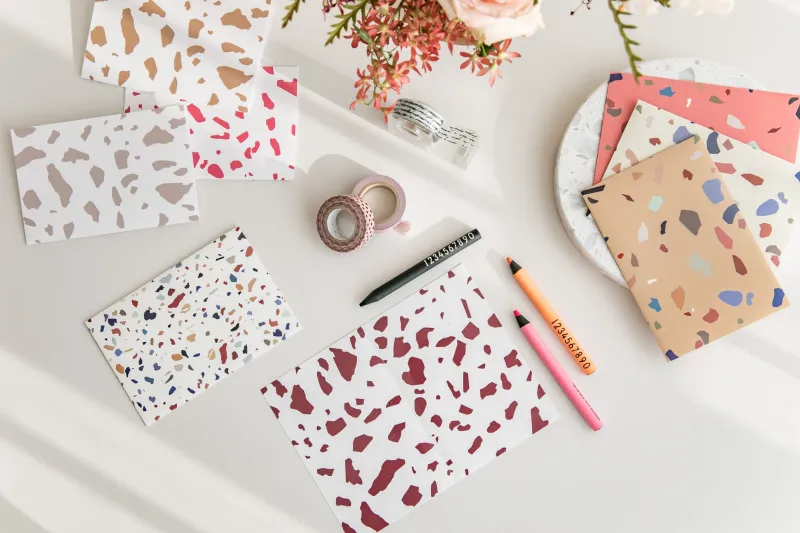
Many participants in these communities draw directly on Japanese stationery aesthetics — decorating envelopes with washi tape, tucking in small pressed flowers or sticker sheets, choosing paper that matches the season. The influence of Japanese binsen (letter paper) culture is unmistakable, even among people who may not have a specific name for where the aesthetic came from.
And that cross-cultural exchange feels very Hey Hoku, honestly — American creativity absorbing and remixing something from Japan, not as appropriation but as genuine admiration and adaptation.
Writing Your Way Back to Yourself
There's a reason people describe writing a letter as an act of presence. Unlike firing off a text while also watching a video while also half-listening to a podcast, letter-writing tends to demand your full attention. The pen moves slowly. Your thoughts have to slow down to match it.
In Japan, there's a concept embedded in tegami culture that a letter is a gift of time — both the time the writer spent composing it and the time the reader will spend with it. That reciprocal generosity is rare in modern communication. It's also, it turns out, exactly what a lot of people are craving.
So if you've been feeling weirdly disconnected despite being constantly connected, maybe the answer isn't another app. Maybe it's a nice piece of paper, a pen that feels good in your hand, and a few honest sentences to someone you've been meaning to reach.
The algorithm won't remember it. But they will.