Digging for Gold: How Thrift Store Hunters Are Unearthing Japan's Y2K Street Fashion Legacy
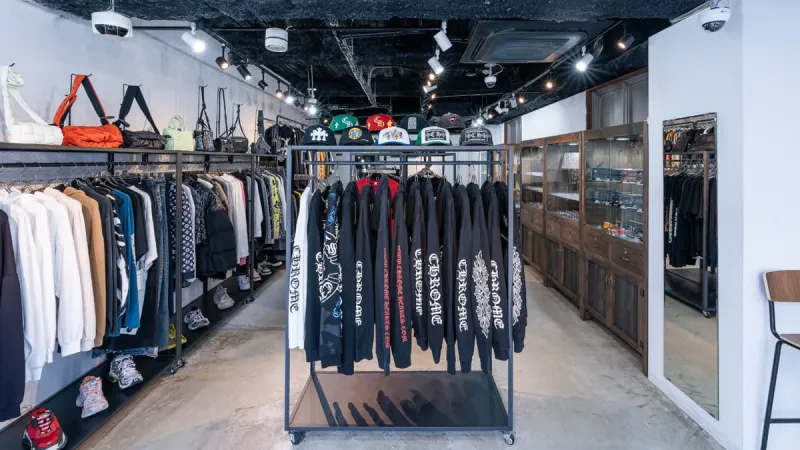
Photo: vintage Japanese streetwear thrift store Y2K fashion rack secondhand clothing, via zula.sg
Ask any serious thrifter about their best find and you'll get a story told with the energy of someone describing a religious experience. The lighting was bad. The rack was jammed. And then — there it was. For a growing number of Gen Z fashion hunters across the US, that revelation moment has started looking a lot like a faded BAPE tag, a Goodenough graphic tee folded under a pile of khakis, or a Stüssy piece with Japanese text on the label that looks just slightly different from anything you'd find at a domestic resale shop.
Vintage Japanese streetwear has officially infiltrated the American thrift ecosystem, and the kids who are finding it are losing their minds — in the best way.
How Did It Get Here?
Before we talk about the hunt, let's talk about the migration. Japanese Y2K fashion — the wild, maximalist, logo-heavy streetwear that defined Harajuku culture from roughly the mid-90s through the early 2000s — made its way to American shores through a few different channels. Some of it came through direct import, brought over by travelers, exchange students, or early sneakerhead culture that maintained tight connections between Tokyo and cities like LA and New York. Some arrived through the used clothing trade, where massive bales of secondhand garments are exported from Japan (which has a legendary secondhand market culture of its own) and distributed to thrift chains across the US.
The result is that pieces from brands like A Bathing Ape, Goodenough, Neighborhood, Hysteric Glamour, and early Japanese Stüssy collaborations have been quietly sitting in Goodwill bins and Salvation Army racks for years. The difference now is that Gen Z knows what they're looking at.
The Education Happened on TikTok
Credit where it's due: the algorithm did something genuinely useful here. Over the past three years, a wave of fashion-focused TikTok creators started making videos about identifying vintage Japanese streetwear — how to read garment tags, what the 'Made in Japan' label on a Stüssy piece signals about its era, how to distinguish a genuine early BAPE hoodie from a replica, what the Goodenough 'GE' logo looks like versus a knockoff.
These videos aren't just informational. They're genuinely entertaining — part fashion history lesson, part treasure map. Creators like @thriftedtokyo and similar accounts built significant followings by documenting their finds in real time, filming the moment of discovery with the breathless energy of a nature documentary. Comments sections filled with people sharing their own scores, asking questions, tagging friends.
The knowledge spread fast. What was once the domain of serious collectors who'd been buying Japanese streetwear since the early internet forums became accessible to anyone willing to spend an afternoon watching videos. And then those newly educated viewers went to their local thrift stores and started finding things.
What Makes This Fashion Worth Hunting?
To understand the obsession, you have to understand what made Japanese Y2K streetwear special in the first place.
Brands like A Bathing Ape (founded by Nigo in 1993) and Goodenough (Hiroshi Fujiwara's label, which helped birth Ura-Harajuku culture) weren't just making clothes — they were constructing a whole philosophy of cool that was simultaneously deeply Japanese and in active, creative conversation with American hip-hop, skate culture, and military surplus aesthetics. The quality was exceptional. The production runs were limited. The graphics were genuinely weird and specific in ways that mass-market fashion never managed to be.
Compared to the disposable, trend-chasing output of fast fashion brands that dominate most of Gen Z's wardrobes, these pieces feel like artifacts. They were built to last, designed with intention, and produced in quantities small enough that wearing one still means something. In a fashion landscape where 'rare' is mostly a marketing term, pieces from this era are actually rare.
The Sustainability Angle Isn't Just Marketing
Gen Z's relationship with sustainability is complicated — there's a lot of performative environmentalism mixed in with genuine conviction — but the thrift store obsession with Japanese vintage sits at a place where style and ethics actually align without much effort.
Buying a twenty-year-old BAPE tee from a thrift store for eight dollars is, by any measure, a more sustainable choice than buying a new graphic tee from a fast fashion brand. It extends the life of a garment, keeps it out of a landfill, and doesn't generate new manufacturing demand. The fact that it also happens to be cooler, rarer, and more interesting than anything currently on shelves at the mall is a bonus that makes the sustainability argument feel a lot less like homework.
Some thrifters have built entire personal brands around this intersection — documenting their finds, styling them, and explicitly framing the hunt as a rejection of fast fashion cycles. It's fashion activism that doesn't require a protest sign, just a good eye and a willingness to dig through a lot of cargo shorts.
The Resale Market Is Paying Attention
Of course, where there's treasure, there's commerce. The discovery of Japanese Y2K pieces in American thrift stores has predictably created a secondary market on platforms like Depop, Grailed, and eBay, where informed resellers flip their finds at significant markup. A Goodenough tee that someone pulled from a bin for three dollars might list for $150. An early BAPE piece in good condition can go considerably higher.
This has created some tension in the community — the classic thrift store debate about resellers 'taking' pieces from people who might actually wear them — but it's also helped establish price benchmarks and authentication standards that make the whole ecosystem more legible. Grailed's Japanese streetwear category has become something close to a reference library for the era, with detailed condition notes and provenance discussions that read more like art auction catalogs than clothing listings.
More Than Fashion — It's a Cultural Excavation
What's most interesting about this trend isn't the clothes themselves, as great as they are. It's what the hunt represents. Gen Z thrifters digging through racks for Japanese Y2K pieces aren't just shopping — they're doing a kind of archaeology, recovering a chapter of fashion history that wasn't well documented in English, that existed largely outside mainstream American awareness, and that turns out to be absolutely foundational to the visual language of streetwear as we know it today.
The brands they're rediscovering — BAPE, Goodenough, Neighborhood, Hysteric Glamour — were shaping the aesthetics that would eventually influence everything from Supreme's graphics to Kanye's early styling to the entire visual grammar of hypebeast culture. Finding a piece of that history in a thrift store bin, still intact, still wearable, still genuinely cool twenty-five years later — that's not just a fashion find. That's a connection to something real.
And in an era when 'authentic' is one of the most overused words in retail, these pieces are the actual thing.