Turn It Down, Tune It In: The Japanese ASMR Creators Helping American Teens Actually Decompress
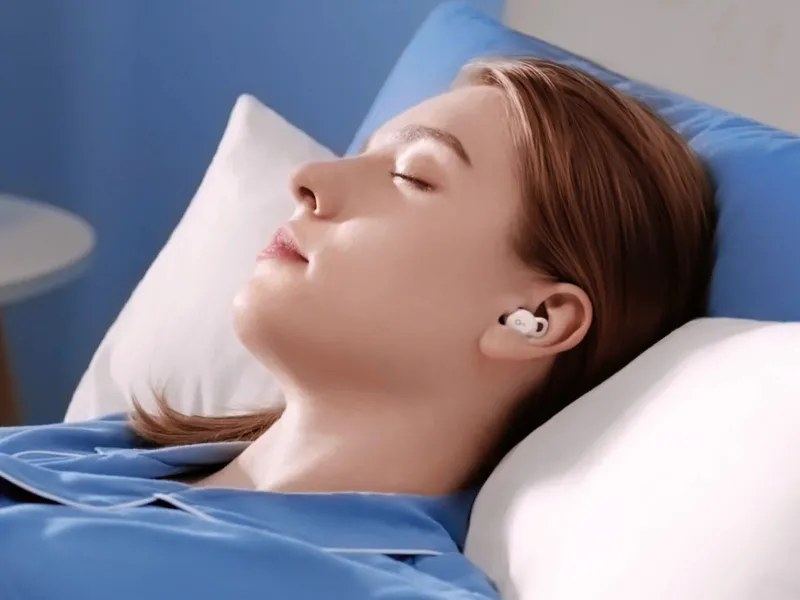
Photo: person wearing earbuds relaxing at night soft ambient lighting peaceful, via cdn.shopify.com
It's 1 a.m. in Columbus, Ohio. A seventeen-year-old named Maya has her phone propped against her pillow, earbuds in, watching a forty-minute video of a Japanese creator walking slowly through a nighttime convenience store. No voiceover. No music. Just the soft mechanical hum of refrigerator cases, the delicate rustle of snack packaging, the quiet beep of a barcode scanner, and the occasional muffled sound of rain outside sliding doors.
She's watched this video — or something very much like it — almost every night for three months.
"It's the only thing that actually works," she says. "Like, everything else is too much."
Maya is not alone. Across YouTube, TikTok, and dedicated ASMR platforms, Japanese audio-visual content has carved out a devoted American fanbase that skews young, overwhelmed, and genuinely hungry for something that most mainstream relaxation content hasn't been able to deliver: intentional quiet.
The ASMR Landscape, and Where Japan Fits In
ASMR — Autonomous Sensory Meridian Response — has been a mainstream internet phenomenon for the better part of a decade. The classic formats are well-worn by now: whispering, tapping, crinkling, the beloved "personal attention" roleplay. American creators built the genre into a billion-view industry.
But somewhere along the way, even ASMR started feeling like content. Produced, packaged, optimized for the algorithm. The thumbnails got more dramatic. The videos got longer. The parasocial performance got louder even as the actual sound stayed soft.
Japanese ASMR creators entered that space doing something almost stubbornly different. The content is hyperspecific to the point of being almost documentary. A camera positioned outside a shrine in Kyoto during a light rain. The ambient sound of a ramen shop at closing time — chairs being stacked, broth still simmering on a low burner. A tea ceremony filmed close enough to hear the bamboo whisk against ceramic. No talking. No explanation. No brand deal read in the middle.
The specificity is the point. And for a generation of American teens marinating in notification culture, it lands like a cold glass of water.
Why Japanese Minimalism Hits Harder Than a White Noise Machine
There's a philosophical reason this content works the way it does, and it maps pretty directly onto Japanese aesthetic values that Hey Hoku readers might already have some familiarity with.
Ma — the Japanese concept of meaningful negative space, the value of the pause — is basically baked into how these creators approach their recordings. Nothing is rushed to fill the silence. The silence is the content. A long, uninterrupted shot of steam rising from a cup of matcha isn't dead air. It's the whole experience.
Compare that to the Western ASMR approach, which often treats quiet as something to fill rather than something to inhabit. The result, for many listeners, is that even well-produced American ASMR can feel like another form of stimulation wearing relaxation's clothes.
Japanese ASMR, at its best, asks you to slow down with it. The camera moves slowly. The sounds arrive without announcement and fade without fanfare. The experience is less "here is content for you to consume" and more "here is a place you can visit for a while."
For teens whose nervous systems have been shaped by years of TikTok scroll velocity, that difference is not subtle. It's seismic.
The Creators Building Audiences Across the Pacific
The creators at the center of this moment are a fascinating group. Many of them are not professional media personalities in any traditional sense. Some are hobbyists with good microphones and a genuine love for the ambient textures of their own daily lives. Others are more deliberate about production — investing in binaural recording setups, scouting specific locations for seasonal sounds, developing a recognizable sonic identity.
What almost all of them share is an audience that is significantly, sometimes predominantly, located outside Japan. The comment sections on these videos are filled with American, European, and Australian viewers who found the content through YouTube's recommendation engine and never left. Many of them don't speak Japanese. It doesn't matter. The content transcends language almost entirely.
The economics are genuinely interesting. YouTube's monetization structure rewards watch time above almost everything else, and ASMR content — especially the long-form, ambient variety — generates exceptional watch time numbers. A 40-minute konbini walkthrough that people fall asleep to every night is a watch-time machine. Some Japanese ASMR creators with relatively modest subscriber counts are generating meaningful revenue simply because their audience is loyal and their content gets watched all the way through, night after night.
Beyond ad revenue, a number of these creators have developed Patreon followings or channel memberships among American fans willing to pay for early access, higher-quality audio files, or simply the feeling of supporting someone whose work has genuinely improved their sleep. That last part — the parasocial dimension — is worth sitting with for a second.
Falling Asleep With Someone You've Never Met
There's something quietly profound about the relationship American teens are forming with these Japanese creators. It's not the loud, personality-driven parasocial bond of a gaming streamer or a beauty vlogger. It's more like... trusting someone with your most vulnerable hour. The moment right before sleep is intimate in a way that most content consumption isn't, and the creators who show up there consistently — reliably, without drama, with the same gentle sounds — earn a specific kind of loyalty.
Comments like "I've listened to this every night for a year" and "this creator doesn't know they're basically a part of my bedtime routine" are everywhere in these videos. There's no equivalent in daytime content. It's a different register entirely.
What This Says About Where We Are
The boom in Japanese ASMR viewership among American teens is, at its core, a story about demand. Specifically, the demand for content that doesn't demand anything back.
In an attention economy built on maximizing engagement, reaction, and response, the idea that the most valuable thing a creator can give you is permission to stop paying attention is almost paradoxical. And yet here we are.
Japanese ASMR creators, many of them working from a cultural tradition that values restraint, precision, and the beauty of the understated, stumbled into exactly the gap that American media left open. They're not trying to go viral. They're trying to capture the sound of rain on a temple roof, faithfully and without fuss.
And a generation of exhausted American teenagers is pressing play, closing their eyes, and finally — finally — getting some sleep.
